Preparing a Bed Between Plantings
Use the transition between crops to inspect and reset your growing space.
By Raised Bed Garden Ideas editorial team · 4 sections
Assess what remains
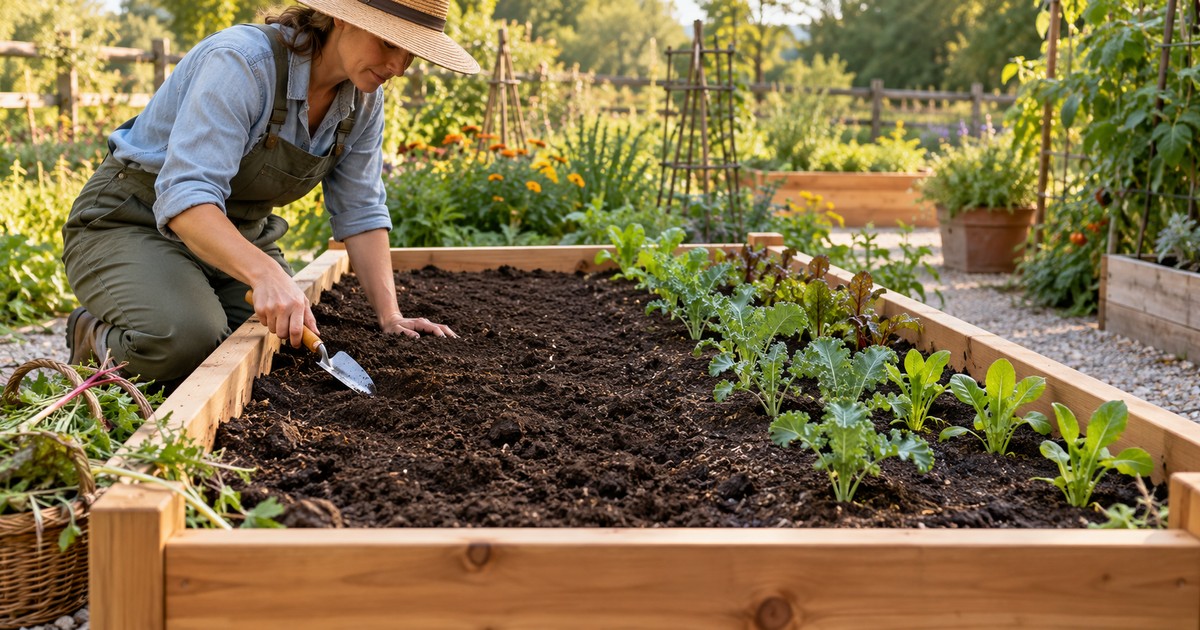
After a harvest, look at plant residue, weeds, and the condition of the soil. Identify what is still producing before clearing the bed. Deal with material showing possible disease according to local gardening guidance rather than automatically adding it to compost. Remove labels you no longer need and update the planting map.
Avoid unnecessary disturbance
Work with the soil when its condition is appropriate, rather than when it is saturated or difficult to handle. Remove unwanted plants carefully and consider whether the bed actually needs extensive digging. Your approach will depend on the growing medium and the next crop. Keep the surface accessible without compacting it by standing in the bed.
Plan additions with a reason
Use soil information and the needs of the next planting to guide amendments. More material is not always better. Follow product instructions where applicable, and keep a record of what you add. If you are unsure about fertility or soil condition, a local soil test can provide a clearer starting point than guesswork.
Choose the next use
Consider how much growing time remains in your local season. The bed might suit another crop, a locally appropriate cover planting, or a period of rest with suitable surface protection. Check the requirements of the next plants before sowing. A deliberate transition helps the bed remain useful without rushing into a planting that will not fit the conditions.