A Watering Routine Based on Observation
Check the growing medium and the plants before reaching for the watering can.
By Raised Bed Garden Ideas editorial team · 4 sections
Look beneath the surface
The top of a bed can look dry while the soil below still holds moisture. Check below the surface near the root zone before deciding to water. Use the needs of your particular crops as a guide. Containers, raised beds, and in-ground soil may behave differently even when they are next to each other.
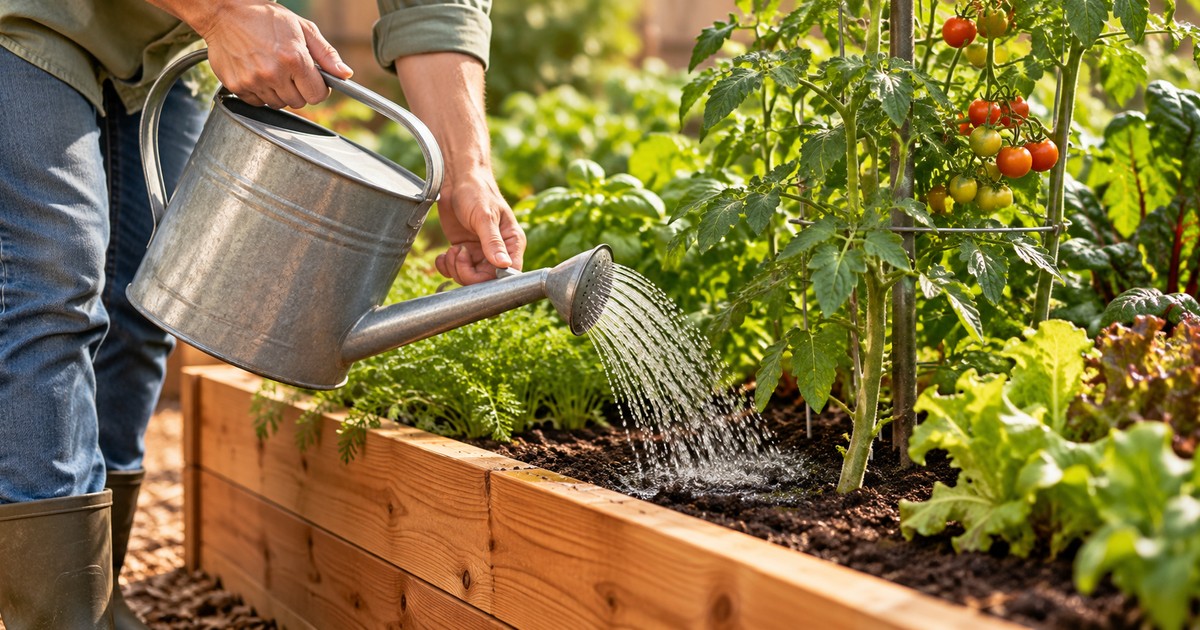
Water the growing area deliberately
Aim water toward the soil rather than spraying the whole garden indiscriminately. Apply it gently enough that it can soak in instead of running away. Watch how the bed responds and adjust the pace. A consistent approach helps you notice changes, including spots that dry out faster or remain wetter than the rest.
Adapt when conditions change
Warm weather, wind, plant size, and rainfall can all alter demand. Recheck your routine when a bed becomes densely planted or the weather shifts. A fixed calendar can be a reminder to inspect the garden, but it should not replace observation. If you use irrigation, inspect its operation and coverage regularly.
Keep a useful record
Note watering alongside weather and plant observations. A few brief entries can reveal patterns that are difficult to remember later. Do not treat a wilting leaf as proof of only one problem; look at the soil and the whole plant. Use the record to improve your routine over time rather than chasing a perfect universal schedule.