Paths That Make a Garden Easier to Use
Give the space between beds as much thought as the beds themselves.
By Raised Bed Garden Ideas editorial team · 4 sections
Trace your usual route
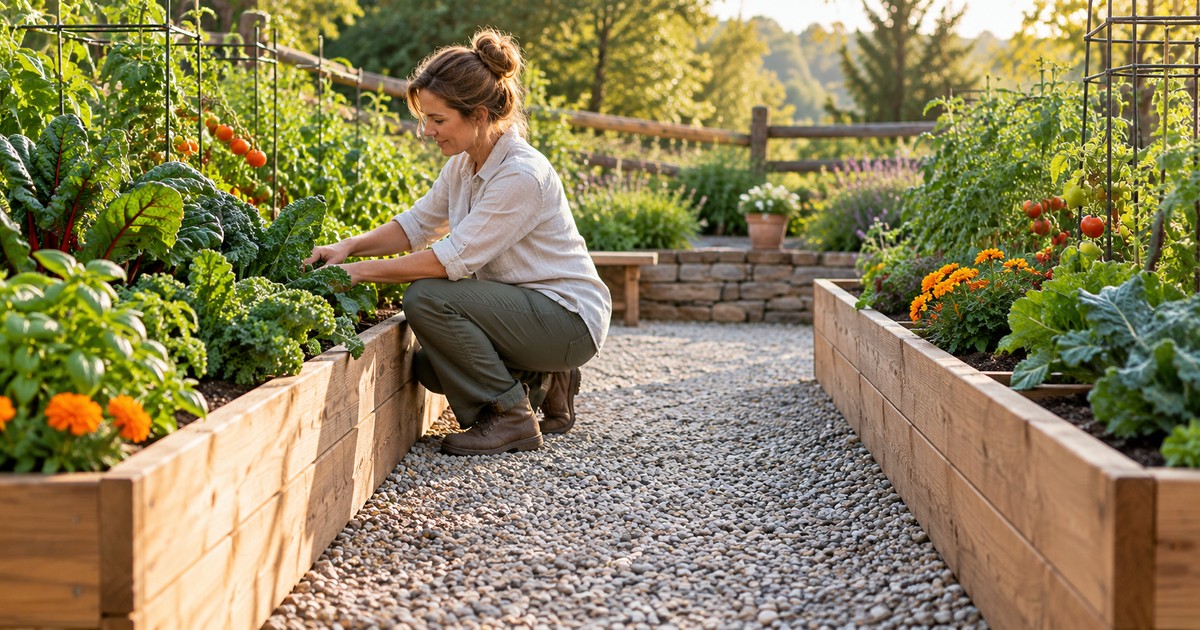
Think about how you will carry water, bring in soil, and harvest produce. Mark the path with stakes or a temporary line and walk it with your usual equipment. Allow room to turn and kneel without blocking access. A direct route from the house or water source makes routine care feel less like a separate project.
Match the surface to the site
Consider how a path material handles rain, weeds, and regular foot traffic. Loose materials may need topping up, while firm surfaces need an appropriate base and drainage. Check local availability and maintenance requirements before choosing. Avoid creating a surface that directs standing water toward the beds or becomes difficult to use after wet weather.
Leave room for plants
Plants can extend beyond the edges of their beds as they mature. Allow for that growth when measuring a path. Put tall or spreading crops where they will not constantly obstruct access. A planting plan and a circulation plan work best together; changing one may require a small adjustment to the other.
Maintain the route through the season
Remove obstructions and inspect uneven spots as the garden develops. Keep tools in a designated place instead of leaving them along the path. After heavy rain, note areas that stay wet and consider an adjustment. A useful garden path supports repeated everyday tasks without demanding constant repair.